
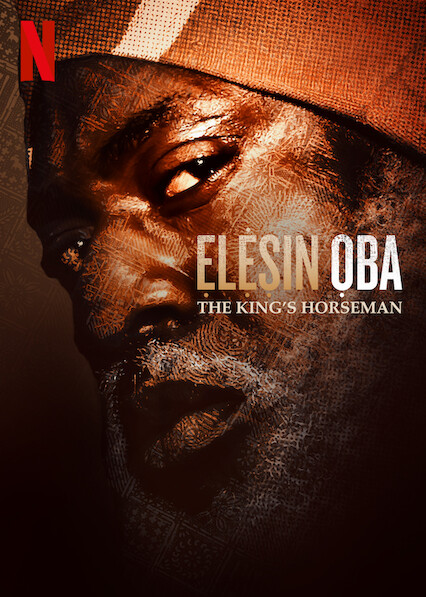
A Powerful Reflection on Identity, Duty, and the Tragedy of Tradition
A Thought-Provoking Exploration of the Weight of Heritage
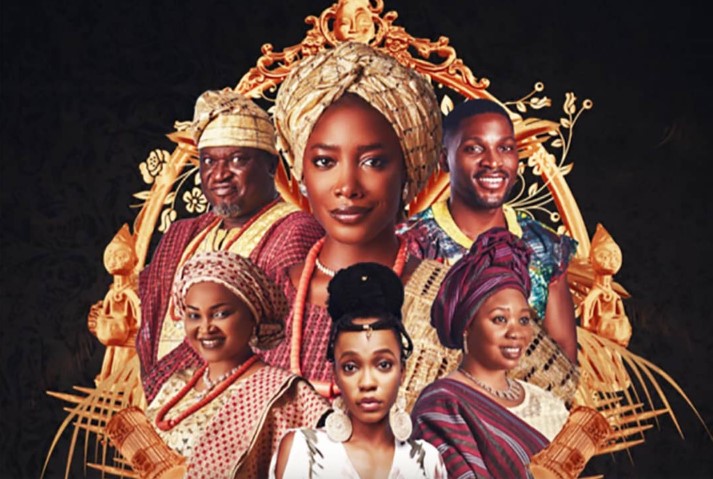
Elesin Oba: The King’s Horseman, a movie adaptation of the renowned play, Death and the King’s Horseman by Wole Soyinka, presents an enthralling depiction deeply ingrained in the history, traditions, and culture of the Yoruba people from Nigeria. The film, directed by the late Biyi Bandele, known for his directorial efforts in “Half of a Yellow Sun” 2013, and “Fifty”, 2015, focuses on the principal themes of responsibility, honor, cultural dignity, and the tragic outcomes of colonial interference.

Plot and Themes
The narrative centers around Elesin Oba, the king’s Horseman, ably portrayed by Odunlade Adekola “Jagun Jagun” 2023, ‘King of Thieves” 2018, whose sacred duty is to accompany the late king into the afterlife, thereby maintaining cosmic harmony and ensuring the welfare of his people. However, British colonial authorities, led by District Officer Pilkings intervene, preventing Elesin from fulfilling his ritual duty. This interruption serves as a powerful symbol of the destructive impact of colonialism on indigenous traditions.
The movie stays true to the profound philosophy of the initial drama, exploring themes of honor, sacrifice, and cultural conflict. It juxtaposes the Yoruba worldview with colonial ideology, vividly portraying the tension between the two worlds, one rooted in spirituality and tradition, the other governed by Western notions of progress and order.

Performance and Characterization
The cast deliver stellar performances, particularly the portrayal of Elesin by Odunlade Adekola, whose internal conflict and moral dilemma are masterfully conveyed with remarkable skill. Elesin’s pride and self-assurance are displayed with signature Adekola gusto while his perhaps not little greed and eventual vulnerability are depicted with great nuance. In contrast, District Officer Pilkings epitomizes the archetypal colonial officer, unaware of the deep cultural significance of the ceremony he interrupts. His performance is impeccably executed, with his blatant disrespect and disregard of tradition clearly portrayed when he wears the traditional masquerade attire to a dinner party.
Elesin’s son, Olunde, is depicted with finesse by Deyemi Okanlawon. He is supposed to serve as a bridge between these opposing worlds. He returns from studying medicine abroad with an appreciation of Western knowledge and culture but still reveres his Yoruba heritage deeply, creating a poignant emotional tension within the narrative. Olunde ably embodies the clash of cultures, reminiscent of the theme discussed in anglophone Poet, Gabriel Okara’s, Piano and Drums, with the traditional Yoruba culture emerging supreme in this case, evidenced by the ritual suicide undertaken by Olunde

Photography
Elesin Oba is a visually stunning celebration of Yoruba and African culture. The photography captures the vibrant hues of Ofi and Adire Yoruba traditional attire, the solemnity of ceremonial events, and the grandeur of Nigeria’s landscapes. These elements are seamlessly woven into the storytelling, with traditional drums, chants, dance, and panegyrics reinforcing the film’s authenticity, grounding it firmly in Yoruba culture and heritage.
The reflective monologues, characteristic of Soyinka’s play are preserved, and while these moments contribute to the film’s philosophical depth, they sometimes slow its momentum for some viewers.
Cultural Context and Impact
Elesin Oba transcends being just a film to become a cultural piece that offers an immersive look into the Yoruba worldview and the devastating effects of colonial interference. The tragic irony that arises from Elesin’s inability to carry out his obligation due to Pilkings’ interference highlights the lack of understanding and disregard of colonial authorities for African traditions. It also unveils the prejudiced “might is right” ideology that colonial forces used to govern the colonized regions in Africa.This is ably exposed by the conversation between Olounde and Pilkings Wife at the Dinner party. In this conversation, Olunde questions the right of Britain, (which was fighting a world war that was killing millions of Britons), to prevent a single man from performing a sacred duty by committing ritual suicide. They were even ready to kill others in order to stop him from killing himself. How’s that for skewed logic?
The film underscores the significance of preserving and understanding indigenous cultures, particularly in a world where such traditions are increasingly endangered by external influences. For Nigerian audiences, it serves as a poignant reminder of their rich and envious, cultural legacy, while for international viewers, it offers a deep, educational glimpse into African traditions.

Final Notes
Elesin Oba: The King’s Horseman, though a gripping visual tale and exposition of Yoruba traditional culture and heritage, is not without its fault. The film leans too much towards theatre and dance drama, which sometimes stiffens performances by the actors and also slows down the Film’s pace. This can however be excused by the fact that the production is an adaptation of a theatrical play, so a spill-over from the source material cannot be entirely overruled.
Nevertheless, Elesin Oba: The King’s Horseman is a visually captivating and thought-provoking film that offers a timely reflection on colonialism and cultural preservation. Its rich exploration of identity, duty, and the clash of tradition with modernity makes it a significant contribution to African cinema and a fitting tribute to Yoruba culture and Wole Soyinka’s literary excellence .
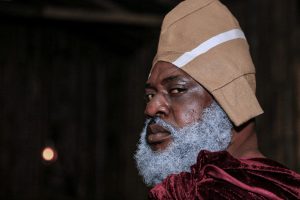
Watch out for performances from Olawale Ibrahim Ashimi (Brymo) as assistant and sidekick to Elesin Oba. Haunting music by him especially his Orun Mooru at the end credits is also very very poignant complimenting the Film beautifully, helping to set mood and pace. This is his second time out in a Nigerian Movie, complementing his first appearance in Price of Admission (2021).
Also watch out for performances from the indefatigable Taiwo Ajayi Lycett, Joke Jacobs as colonial-era Nigerian Bourgeoises as well as Jide Kosoko as the comedic colonial-era police Sergeant. They all bring in their acting dexterity to complement the taut storyline of Elesin Oba: The King’s Horseman.
Our verdict – Definitely a must watch. We won’t be surprised if you get a bit angry at the British after you see this powerful Film.





Leave a Reply